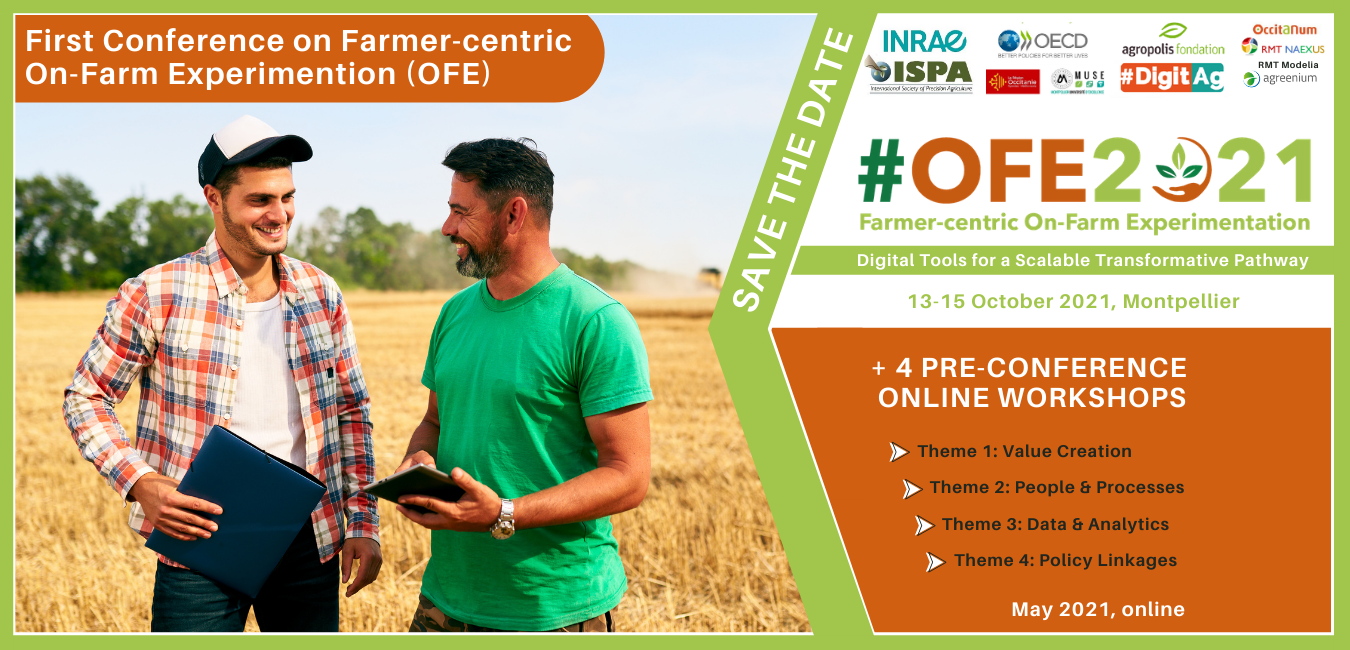
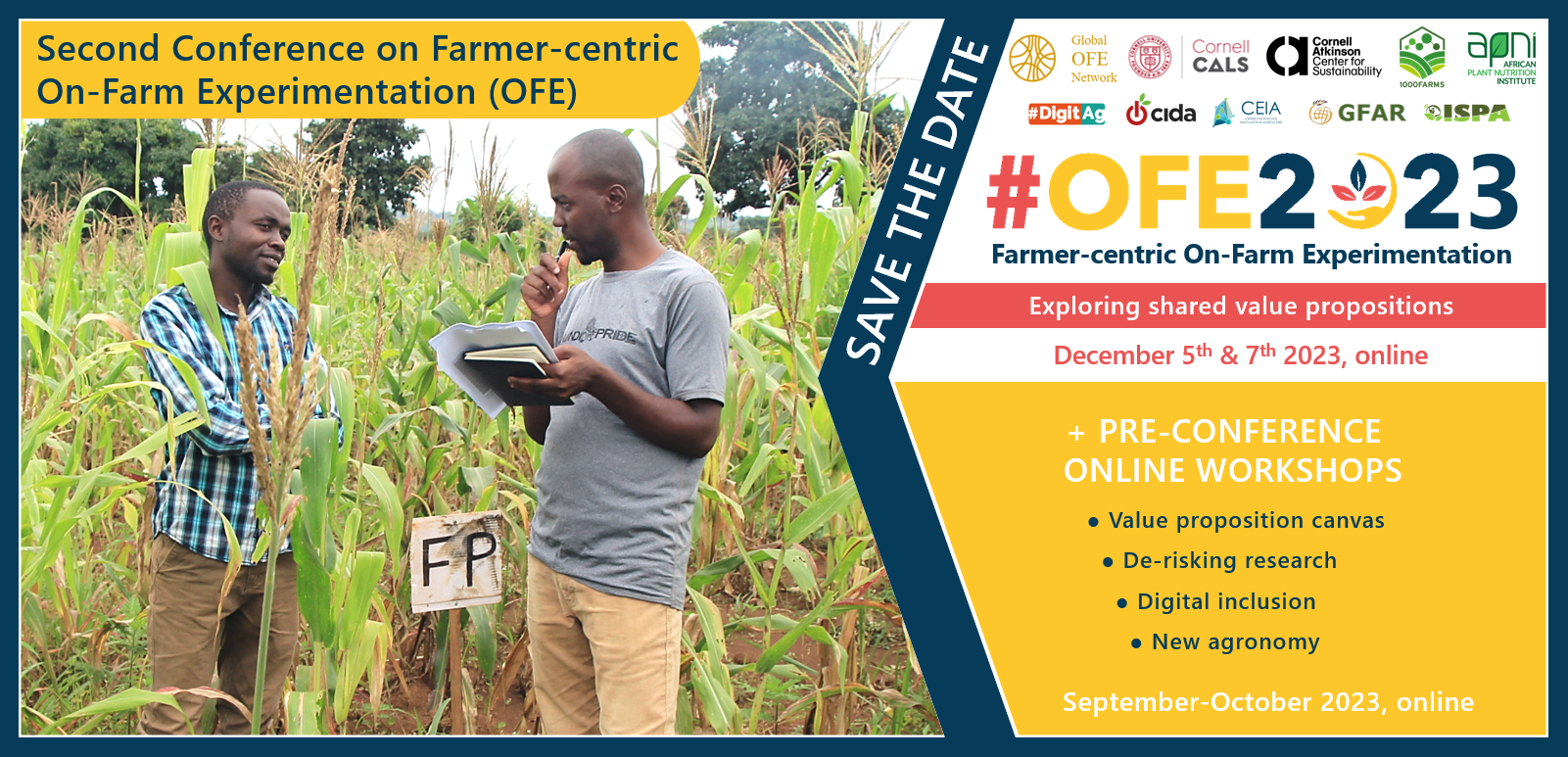
How can we produce knowledge better in agriculture?
How can we make the most of the specific knowledge of farmers, scientists and other actors of food systems?
How can we ensure efforts are relevant locally, and progress positive change globally as well?
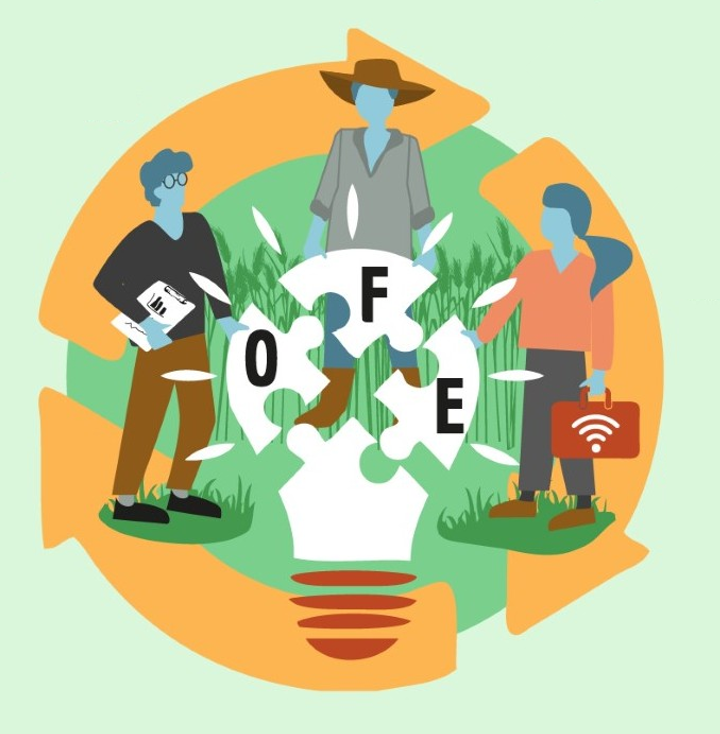
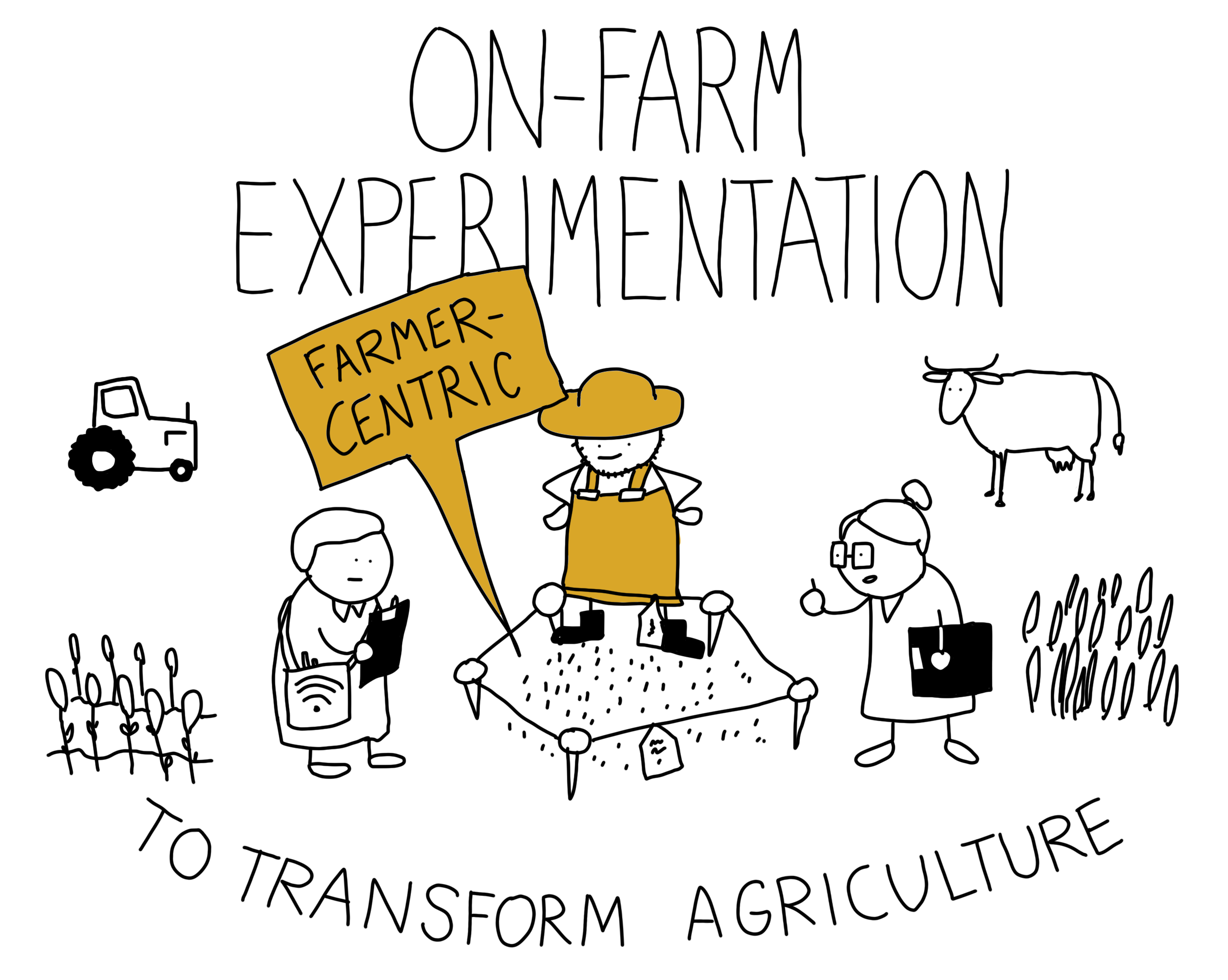
“OFE” stands for “farmer-centric On-Farm Experimentation” and is defined as an innovation process that brings agricultural stakeholders together around mutually beneficial experimentation to support farmers’ own management decisions.
Farmers gain insights relevant to their own fields
Researchers gain real world data
Suppliers gain credibility
Other stakeholders gain connection to real farming conditions
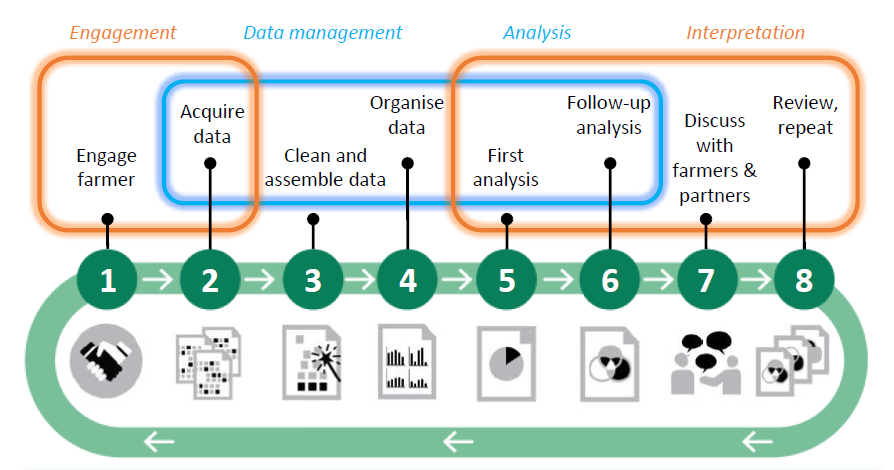
OFE is conducted at scales that matter to farmers, in their own fields, under their own management, as part of a continuous process of improvement.
Typically, several steps are necessary for all to explore and learn collaboratively.
Practically, OFE is operationalised in varied ways that fit objectives, conditions and the resources available.
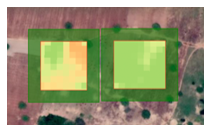
Experimentation has always being part of farmers’ practices as a means to adapt, and of agricultural sciences as a means to systematically investigate questions.
To build fit-for-purpose food systems, these different types of knowledge must build on each other to a much greater extent than is currently the case across the world.
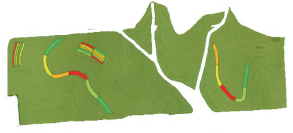
Farmer-centric OFE continues a long history of participatory and collective action to progress food systems.
As agricultural and scientific conditions continuously change and evolve, OFE re-emerges as a choice instrument to address challenges by connecting local and global knowledge.
This renewal includes the recognition of 6 guiding principles:
Farmer-centric
Real systems
Evidence-driven
Specialist-enabled
Co-learning
Scalable
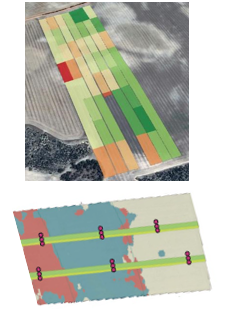
OFE is a way to explore and investigate in agriculture that makes the most of both local and scientific knowledge
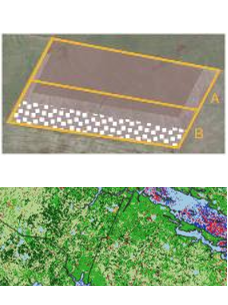
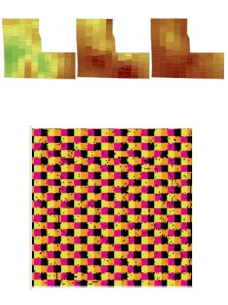
To go further
The OFE comic: Cartoons on the limits of scientific practice vs. real-world complexity, and how to move forward through OFE
Press release: “A new generation of on-farm experimental activities, co-created with farmers, is opening up alternative innovation pathways in agriculture”
Nature Food article: “On-Farm Experimentation to transform global agriculture”, a perspective by an international team of researchers from 9 countries: renewed understanding and fundamentals of OFE
Inaugural conferences:
OFE2021 and OFE2023